The Bleecker Street Restaurant & Bar belongs to the dining history of Tarzana, a Los Angeles neighborhood in the San Fernando Valley. Listings and restaurant coverage associate it with 5442 Yolanda Avenue, near Ventura Boulevard. This is a retrospective, not an invitation to book a table: available sources identify the restaurant as closed, and this publication has not established a reopening.
What makes its story worth keeping is the meeting of two ideas: the American neighborhood restaurant and the suggestion of downtown New York hospitality in a Southern California setting. That connection is best explored carefully. A restaurant name can suggest an atmosphere without establishing a documented chain of influence, and an old review cannot tell us what occupies a building today.
What the surviving record supports
GAYOT's historical restaurant listing gives the Yolanda Avenue address and labels the restaurant closed. Its archived description presents a multilevel American restaurant with a bar and some Southern culinary influences. Those details describe the restaurant covered by the review, not a current dining operation.
A separate September 2021 report from What Now Los Angeles discussed a proposed replacement restaurant at the same address. This supports treating Bleecker Street as a historical subject, but it does not establish an exact closure date or prove the present status of a successor. A proposal, an opening, and an operating business are three different things.
These sources leave gaps. We have not established a reliable opening date, a complete ownership history, or a dated sequence of menu changes. Rather than turning scattered listings into a polished but unsupported chronology, we retain those uncertainties. Old telephone numbers and email addresses are not offered here as active contact channels.
A New York reference in a Valley setting
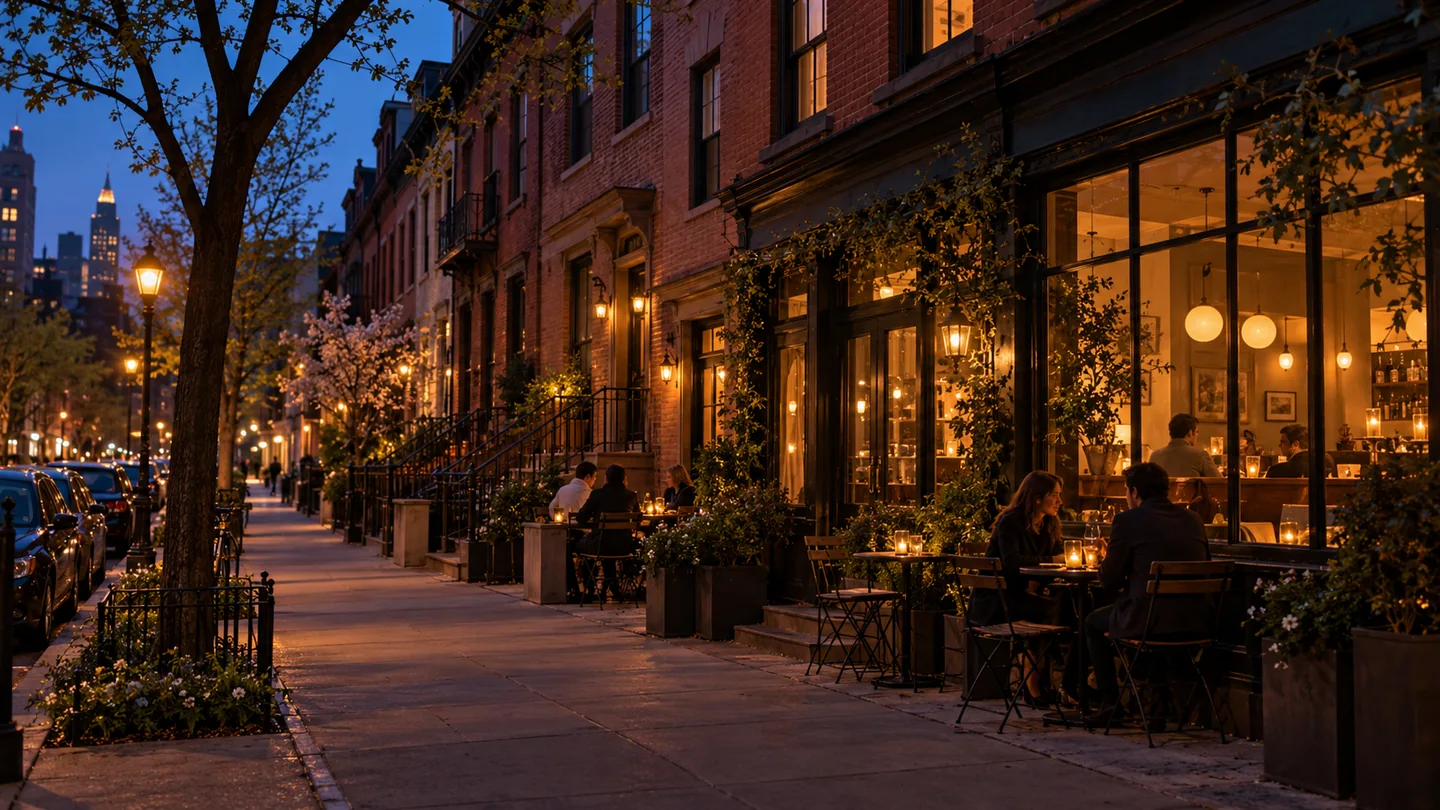
Bleecker Street evokes Greenwich Village for many readers. The neighborhood's cultural associations provide a useful lens for understanding the restaurant's reported Village-inspired concept. They do not prove that particular dishes, furnishings, or service practices were imported from any one New York establishment.
Our companion essay on Greenwich Village and neighborhood restaurants separates the district's documented cultural history from broader editorial observations about hospitality. That distinction matters here. An evocative name can supply a mood; the actual dining experience depends on the people, room, kitchen, and neighborhood around it.
In a California context, such a concept could invite a different rhythm from a Manhattan street restaurant: guests might arrive by car, combine dinner with another Valley errand, or gather for an evening that requires deliberate transportation planning. These are interpretive possibilities, not documented accounts of Bleecker Street customers.
Reading a restaurant through its room
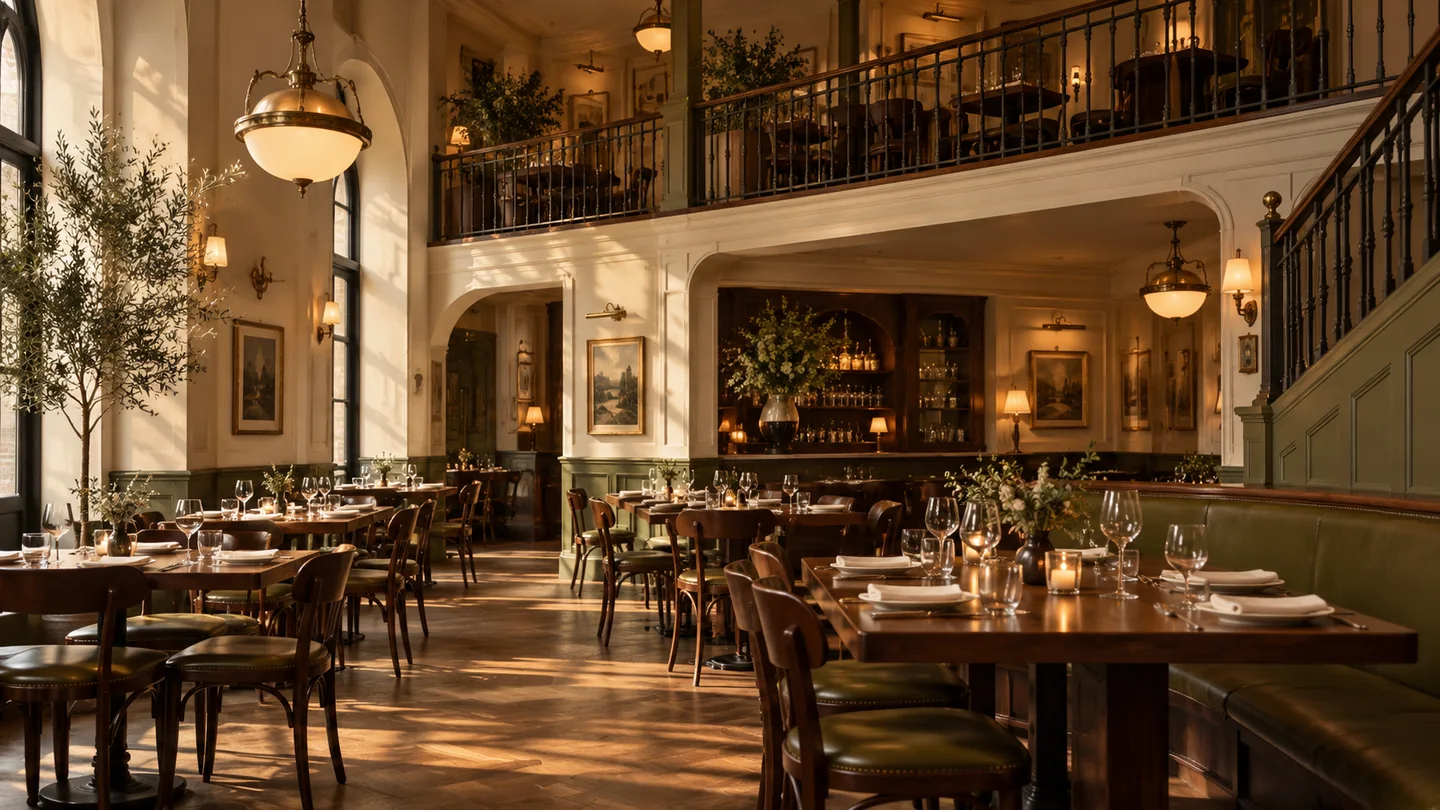
Restaurant heritage is often reduced to a list of dishes. Rooms can be just as revealing. A bar, a mezzanine, and separate seating areas suggest the possibility of several experiences within one establishment: conversation over drinks, a full meal, or a quieter table removed from the busiest section.
That is an interpretation of reported physical features, not firsthand reporting. We have not inspected an authenticated floor plan or visited the historical restaurant. Nor do we infer accessible routes, seating capacity, or reservation arrangements from a description of a multilevel interior. Each requires its own evidence.
The same caution applies to outdoor seating. An older review may document that it existed at one point, but it cannot tell a reader whether a patio remained available throughout the restaurant's life. Our guide to outdoor dining and atmosphere examines what such spaces can contribute without presenting an illustrative image as an archival photograph.
The menu as a historical document
An old menu can show how a restaurant described itself: familiar categories, regional references, sharing plates, or a mix of casual and more elaborate preparations. It cannot establish whether every item was served consistently, how generous a portion was, or what a meal would cost today.
For Bleecker Street, the surviving review's broad description is more defensible than reconstructing an entire menu from scattered delivery pages. We do not publish an active menu, attach current prices to historical dishes, or turn a reviewer's opinions into our own dining verdict.
Readers comparing restaurant information can apply the same method elsewhere: identify the publisher, inspect the date, distinguish an archived page from a current operator website, and check the location. Restaurants can share names, and ordering platforms sometimes retain pages long after service ends.
Why the neighborhood context matters
A restaurant's identity comes partly from its setting. Tarzana offers a different scale of daily life from Lower Manhattan, and Ventura Boulevard provides a useful geographic reference for understanding the historical address. Our Tarzana dining culture feature looks at that setting without claiming one restaurant represents every household or community in the Valley.
Local restaurants can become familiar reference points even for people who rarely dine there. A name on a shopping-center directory, a meeting place proposed in a group conversation, or a remembered bar can persist after a business closes. Those possibilities explain why careful restaurant histories have value, but they are not substitutes for named sources or recorded testimony.
Keeping the record open to correction
A stronger future account might include dated advertisements, authenticated menus, public records, or licensed photographs with known dates. Each would answer a different question. An advertisement can establish what a business promoted; a menu documents a particular offering; a permit records an administrative event. None automatically supplies the whole story.
Until that evidence is assembled, the responsible account remains modest. Bleecker Street was associated with this Tarzana address, surviving coverage describes an American restaurant and bar, and available reporting supports a closed historical operation. Its exact business timeline and the full basis of its Greenwich Village inspiration still require documentation.
Preserving that distinction gives the restaurant more respect than a fictional reconstruction would. The useful legacy is an identifiable place in the Valley's dining record, surrounded by questions that can still be researched rather than details that have merely been made to sound certain.